Best Digital Marketing Services – Website Development

SEO for Real Estate Investors: Turning Searches into Serious Opportunities

Real estate decisions start long before site visits or phone calls. They start with a search. Buyers, investors, and partners open Google to research locations, returns, and opportunities. If your brand does not appear at that moment, you lose attention before the conversation even begins. SEO helps real estate investors stay visible at the exact point where intent is highest. It is not about chasing clicks. It is about earning trust early and consistently. Why SEO Is a Smart Move for Real Estate Investors Unlike listings or ads that expire, SEO builds long term value. Each optimized page, blog, or location guide becomes a digital asset that works quietly in the background. Strong SEO helps you: Attract investors actively researching opportunities Build authority in specific locations or asset types Reduce long term dependency on paid ads Create steady inbound interest instead of cold outreach This makes SEO especially powerful for investors who think long term. Understanding How Your Audience Searches Real estate search behavior is specific. People rarely search broad terms with no intent. They look for details that match their goals. Effective SEO starts with understanding this behavior: Location based searches such as city, neighborhood, or region Property type like apartments, commercial units, or land Investment focused queries related to yield, pricing, or risk Targeting these search patterns helps you reach people who are already thinking about action. Local Visibility Is a Competitive Advantage Real estate is local by nature. Search engines know this and prioritize location relevance. To strengthen local visibility: Optimize your Google Business Profile with accurate details Create dedicated pages for each target city or market Keep business information consistent across platforms Add local insights instead of generic descriptions This improves visibility for searches that include location intent and builds credibility within specific markets. Your Website Should Support SEO, Not Block It Many real estate websites look good but fail to perform. SEO friendly websites focus on clarity, speed, and usability. Key areas to focus on: Clear headings that explain what the page is about Fast loading pages, especially on mobile Simple navigation that guides visitors naturally Optimized images that do not slow the site A well structured website helps both users and search engines understand your value. Content That Builds Trust Before the First Call Good SEO content does not sell aggressively. It educates and reassures. Content that works well for real estate investors includes: Market insights and pricing trends Location guides and neighborhood analysis Investment risks and opportunity breakdowns Frequently asked questions from buyers and partners This type of content positions you as a knowledgeable and transparent investor, not just another listing site. Authority Comes from Being Mentioned, Not Just Seen Search engines trust websites that others trust. Mentions and links from credible sources act as signals of authority. Ways to build authority naturally: Publish original insights worth referencing Collaborate with industry platforms or media Share data driven market observations Partner with complementary businesses Authority building takes time, but its impact on rankings is long lasting. Common SEO Mistakes to Avoid Many investors lose momentum due to avoidable mistakes: Targeting keywords that are too broad Ignoring mobile experience Publishing thin content with no real value Treating SEO as a one time task instead of a process Avoiding these mistakes keeps your strategy focused and sustainable. SEO Is a Long Game That Pays Consistently SEO does not bring overnight results, but it builds momentum. Over time, rankings improve, traffic becomes more qualified, and trust grows organically. For real estate investors, this means: Better quality inbound leads Stronger brand presence in target markets More informed conversations with prospects Higher confidence from partners and investors SEO is not just a marketing tactic. It is a digital foundation for long term growth in real estate.

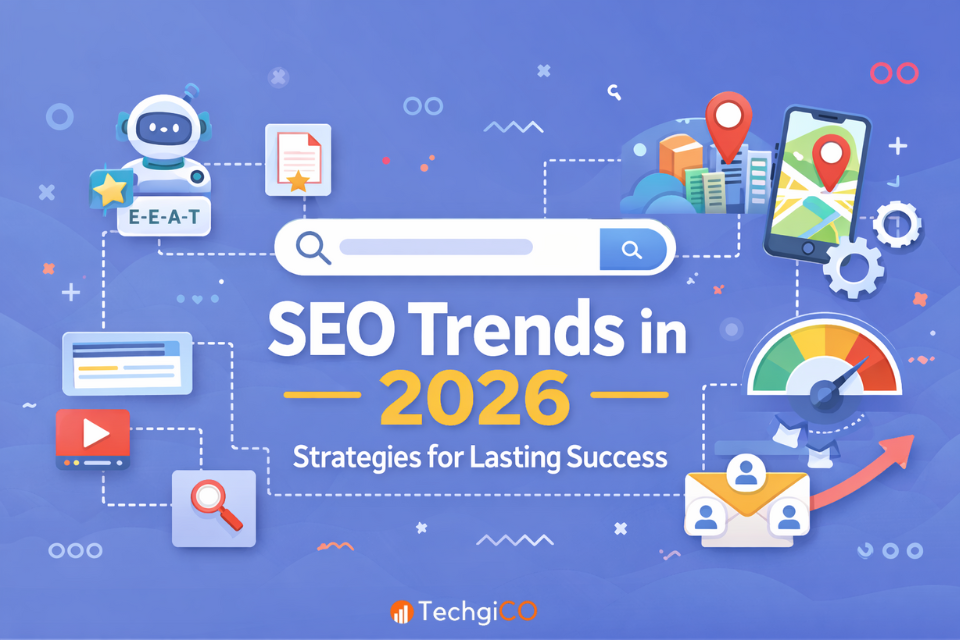
SEO in 2026: Practical Trends and Actionable Strategies for Marketers

Search is changing fast. Generative answer layers, more forum and video visibility, and stronger personalization are shifting how people discover brands. If you want your SEO to drive sustainable traffic and leads this year, focus on durable principles, adapt where major platform changes happened, and build systems that capture attention across search surfaces. Below I distill the key trends to watch in 2026 and give clear, tactical steps you can start applying right away. 1. Optimize for AI answer boxes and summaries What changed: Google and other engines now show AI-generated overviews above the organic listing. These overviews pull information from high-quality pages and can reduce clicks for direct answers. Tactics you can apply today: Prioritize clear, direct answers to common queries in your content, using concise paragraphs or FAQ blocks near the top. Use structured data and strong headings so scrapers and answer engines can parse your content. Aim for authoritative signal building so your pages are more likely to be cited by answer engines. 2. Double down on E-E-A-T signals: experience, expertise, authority, trust Why it matters: Answer engines prioritize trustworthy information. Demonstrating real expertise and first-hand experience helps content stand out in AI summaries and reduces the risk of being ignored. Actions: Add author bios and case studies that show tangible outcomes. Use citations, original data, and dated updates to prove freshness and authority. Where relevant, include first-person insights and nuanced takes that generic pages lack. 3. Treat forums as a discovery channel, not a nuisance What changed: Reddit and Q&A sites have grown in search visibility, and forum pages increasingly appear in SERPs. That growth has translated to meaningful traffic increases for forums. Monitor relevant threads and contribute  useful answers with a link back when appropriate. Create short, modular content tailored to forum audiences that solves specific problems. If it fits your brand, build communities or AMAs to generate original user content that search engines favor. 4. Invest in video and YouTube SEO What changed: Video is appearing more in search results and in AI answer contexts. Pages with useful on-page videos often perform better. Practical steps: Publish short, searchable videos that answer a single question, and host them on your site plus YouTube. Optimize titles, descriptions, transcripts, and thumbnails with primary keywords and clear intent signals. Use video schema and time stamps so search and AI systems can surface the right moment. 5. Preserve core on-page and technical fundamentals What changed: New surfaces are important, but traditional SEO still moves the needle. Technical health, page speed, mobile usability, and good information architecture remain essential. Checklist to run monthly: Crawl your site for broken links, indexation issues, and duplicate content. Optimize core web vitals and server response times. Maintain a prioritized content plan for pages that align with business KPIs. 6. Adapt to zero-click behavior What changed: A growing share of searches end without a click. Studies show a majority of queries now result in no click on external sites. That trend makes on-site conversion and brand capture more important. Design pages to capture value even if users don’t click through from search. Use lead magnets, clear CTAs, and frictionless email capture. Optimize for featured snippets and People Also Ask to maintain visibility even in zero-click contexts. 7. Use AI tools to scale but keep human control What changed: Most SEO pros already use AI tools to speed research and operations. These tools are useful for ideation and efficiency, but human oversight is critical for nuance and accuracy. How to balance: Use AI for keyword clustering, outlines, and spotting optimization gaps. Always edit outputs, add unique insights, and verify facts before publishing. Treat AI as a force multiplier rather than a replacement for domain expertise. 8. Personalization, local search, and social search matter more What changed: Personalized search and social platforms are influencing rankings and discovery. Local intent and social signals can move the needle for many businesses. Tactical moves: Segment content by audience intent and create location pages with real local proof. Optimize for social discovery by creating content designed to be shared and referenced on platforms where your audience spends time. Putting it together: an action plan for the next 90 days Week 1 to 2: Audit E-E-A-T signals, fix author bios, and add trust elements. Week 3 to 6: Run a technical crawl, fix the top 20 performance issues, and improve mobile speed. Week 7 to 10: Create three answer-style pages designed for AI overviews and one video per pillar topic. Week 11 to 12: Launch a forum engagement plan and measure traffic, mentions, and citations. Final thoughts Search is no longer a single thing. It is a set of surfaces where users expect fast, accurate answers. The winning approach is not chasing every shiny tactic. It is a disciplined mix of strong fundamentals, authoritative content, and smart adaptation to new SERP features. If you build systems that prove your expertise and capture value even when clicks fall, your SEO will continue to deliver meaningful results.

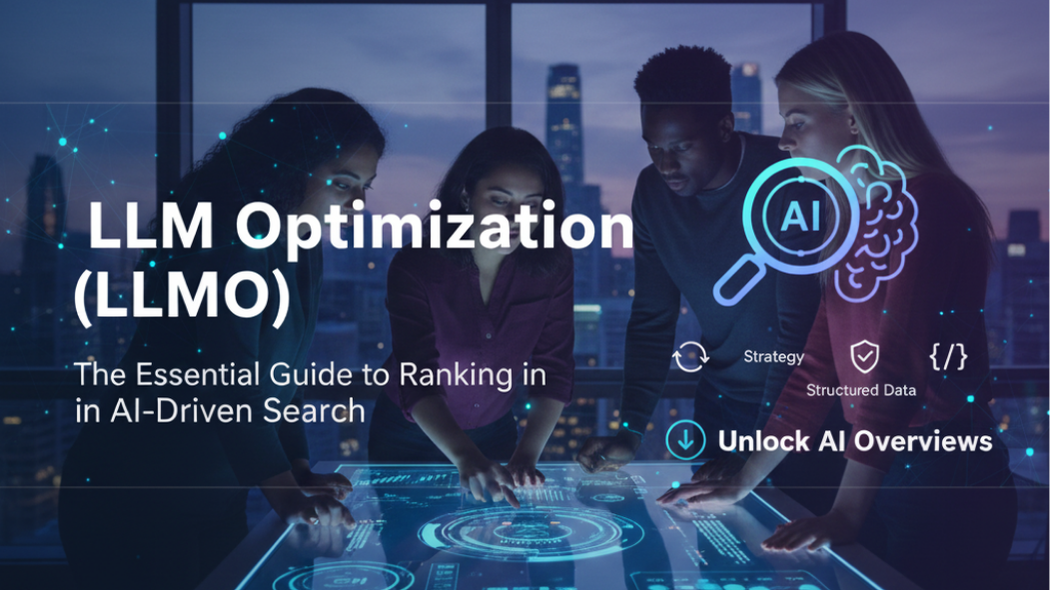
LLM Optimization (LLMO): The Essential Guide to Ranking in AI-Driven Search and AI Overviews

For years, success in search engine optimization (SEO) relied on achieving a high rank on the results page. However, many content creators are now seeing a critical shift: rankings may be strong, but website traffic is dipping. This paradox isn’t an algorithm error; it’s a fundamental change in how users consume information. Modern search, increasingly powered by Large Language Models (LLMs) like Gemini, Claude, Perplexity, and Google’s AI Overviews, delivers full, summarized answers directly on the Search Engine Results Page (SERP). Winning visibility today means adapting your strategy from aiming for the traditional “blue link” to aiming to be the authoritative source cited in the AI’s final, synthesized answer. This strategic evolution is known as LLM Optimization (LLMO). What is LLM Optimization (LLMO)? LLM Optimization (LLMO) is the strategic practice of structuring your content and strengthening your brand authority to ensure your expertise and data are accurately cited and recommended within AI-generated responses. While traditional SEO focuses on technical elements, backlinks, and keywords to rank pages, LLMO is focused on maximizing your brand’s presence in the conversational, zero-click environment of AI-driven search. It’s about becoming a trusted component of the internet’s knowledge base, making it easy for LLMs to identify, extract, and reference your information as reliable fact. If traditional SEO aims for page one, LLMO aims for inclusion in the first paragraph of the AI’s answer. The Core Problem: The Rise of Zero-Click Answers The necessity of LLMO stems from the shift in user behavior driven by AI. When a user asks a question today, the AI frequently delivers a comprehensive answer, complete with definitions, steps, and context, often citing the sources it used to generate the reply. This creates the “zero-click” dilemma. Even if your page ranks first in the traditional organic results, the user may never scroll down to see your link because the AI Overview has already resolved their query. This is a crucial distinction: your content might be highly ranked, but if it isn’t structured for easy LLM retrieval and citation, you lose the opportunity to connect with the customer. Failing to adapt to this model means risking lost brand visibility and traffic, regardless of your conventional SEO success. To thrive in this environment, marketers must pivot their focus from simply achieving rankings to actively optimizing for data credibility and retrievability. The Three Pillars of Effective LLM Optimization Success in LLMO is built upon three foundational pillars that ensure both trust and accessibility for large language models. 1. Establish Unquestionable Authority and Expertise (E-E-A-T) LLMs operate by predicting the most likely next word based on patterns in their vast training data. When faced with conflicting information, they prioritize content associated with sources that demonstrate clear Experience, Expertise, Authoritativeness, and Trustworthiness (E-E-A-T). Focus on the Author: Ensure content is written or heavily reviewed by genuinely qualified professionals. Your author bios should clearly link to professional achievements, degrees, or certifications that establish credibility in the topic area. Original Research: LLMs favor content that presents novel data or insights. Publishing proprietary studies, statistics, or case studies gives your content a unique edge and makes it a highly valuable, and therefore highly citable, resource. Earn High-Authority Backlinks: LLMs lean heavily on consensus and citation. Strong backlinks and brand mentions from highly credible, high-domain-authority publications signal to the LLM that your brand is a trusted voice in the industry. Digital PR efforts—pitching unique stories or data to journalists—are now a more powerful LLMO tactic than ever before. 2. Optimize Content for Retrieval-Augmented Generation (RAG) LLMs use processes like Retrieval-Augmented Generation (RAG) to pull real-time information and specific facts from the web to synthesize their answers. To be easily retrieved, your content must be clean, structured, and segmented. Structure with Clarity: Use clear headings (H2, H3) that frame content as direct answers to questions. For example, instead of a title like “Our LLMO Approach,” use “How Do I Optimize for LLMs?” Implement Structured Data (Schema): Schema markup (like FAQ, HowTo, Product, or Review schema) gives the LLM a ‘cheat sheet’ to your content, explicitly labeling the key factual components on the page and improving the chances of being pulled into an AI Overview. Use Definitive Language: Avoid vague or hyperbolic statements. Content should contain clear, short, and fact-based answers that can be easily extracted and repurposed by the LLM without losing meaning or context. 3. Embrace Context and Conversational Queries Traditional SEO focused on short-tail keywords. LLMO shifts the focus to long-tail, conversational queries that mimic how users interact with a chatbot. Answer the “Why”: Rather than just addressing the main keyword, ensure your content anticipates and answers related sub-questions. This comprehensive, contextual coverage establishes Topical Authority—the perception that your brand owns the entire subject, not just a single article. Build Topic Clusters: Organize your content into logical topic clusters, where one detailed “pillar” page links out to multiple, more specific supporting articles. This internal linking structure creates a web of authority that signals comprehensive expertise to both search engines and LLMs. Practical Steps for Implementing LLMO Today Integrating LLMO isn’t an overhaul of your entire marketing plan; it’s an intelligent refinement of your existing SEO practices. Refine Your Content Strategy: Use tools like Google’s “People Also Ask” or industry forums (like Reddit/Quora) to discover the exact, conversational questions your audience is asking. Write content that answers these long-tail queries directly, using the question itself as an H2 or H3 subheading. Audit for E-E-A-T Gaps: Review your top-performing pages. Do they clearly list the author? Are there explicit citations for data? If you lack original research, commission a small industry survey or compile unique case studies to boost your authority. Deploy Schema Markup: Focus your development team on implementing robust and accurate structured data across all eligible pages (especially FAQs, definitions, and step-by-step guides). This is one of the fastest ways to improve retrievability. Track Your Citations: Since LLMO’s goal is citation, you need to track it. Manually query LLMs (ChatGPT, Gemini, Perplexity) about your industry topics to see who

    Ready to Grow Your Business Online? Let’s Get Started!

    +91